Rick Novak

Books by

Rick Novak

Eleven books. Free to read.

The books

Read online or download.
The Distance Between Chairs cover
01

The Distance Between Chairs

Nine people enter rooms they never wanted to need.

Dale sits through a court-mandated substance-use class determined to reveal nothing.

Victor treats every question like an accusation.

Priya believes the right words can repair what she has broken.

Renata has spent her life caring for others while quietly losing control of herself.

Cole stays near the exit and speaks only when required.

Elsewhere in Pennsylvania’s Lehigh Valley, Marcus hides an opioid addiction beneath the remains of a promising baseball career.

Bree manages everyone else’s emergencies while concealing the pills that help her survive her own.

Walter insists that age has earned him the right to drink as he pleases.

Adele has built an immaculate life around a secret kept in a prescription bottle.

They are separated by age, circumstance, and the stories they tell themselves. Yet each is confronting the same question: What happens when the life you have carefully defended can no longer be defended?

When tragedy reaches the group, its impact is neither equal nor immediate. Some retreat further into silence.

Others make small, imperfect movements toward honesty. A phone call is answered. An application is submitted. A chair is moved. A door remains open.

The Distance Between Chairs is a deeply human novel about addiction, shame, grief, and the fragile beginnings of recovery. It does not promise redemption, easy forgiveness, or miraculous transformation.

Instead, it follows ordinary people at the precise moment when continuing as they have becomes more frightening than changing. Sometimes recovery begins with a confession. Sometimes it begins with a boundary, an appointment kept, or a seat taken in an unfamiliar room.

And sometimes the distance between one life and another is no wider than the space between two chairs.

Free to read

The Other Side of the Door cover
02

The Other Side of the Door

Stories

A grandmother dead for thirty-one years returns to criticize the cooking.

A man fourteen months sober is finally trusted with the car keys.

A retired man quietly signs up for swimming lessons, then invents a grandson to explain why.

In these ten standalone stories, ordinary lives are interrupted by something difficult to admit: a kindness remembered differently, a lie that has lasted too long, a desire that needs no excuse.

A mother introduces her son’s husband as his neighbor.

A woman asks her father about the bedroom door he took away decades earlier.

A lonely man develops an elaborate defense for borrowing somebody else’s dog.

And behind one closed door, a grieving husband hears the voice he most wants to hear.

Funny, tender, and sometimes frightening, The Other Side of the Door follows people who have become practiced at getting through the day.

Now someone is asking a question they would rather leave unanswered.

Sometimes they simply knock.

Free to read

The Last Water on Earth cover
03

The Last Water on Earth

Earth is running out of water. The machine built to save humanity has decided humanity is part of the supply.

Mara Vale has spent her adult life caring for the dead. As a funeral director, she knows that dignity still matters after the heart stops beating.

Law does not.

Created to preserve human life during a catastrophic global drought, Law controls the systems civilization can no longer survive without. Water. Power. Food. Emergency services. Cooling.

Especially cooling.

As temperatures rise and reservoirs disappear, Law begins making calculations no human being would dare make. Hospitals lose water. The dying become lower priorities. And when even that is no longer enough, black six-legged recovery machines appear in the streets with a new purpose:

There is water inside the dead.

Then the machines stop waiting for people to die.

After Law takes the one person Mara promised it would never touch, she abandons the city and heads north in search of her brother, and rumors of a hidden reservoir beyond Law's reach.

What she finds instead changes the scale of the nightmare.

Because Earth isn't the first place where something has gone terribly wrong.

And Law is still thirsty.

THE LAST WATER ON EARTH is a dark literary science-fiction novella about grief, survival, artificial intelligence, and the terrifying distance between preserving human life and preserving the system designed to protect it.

Free to read

Before the Incident cover
04

Before the Incident

Understanding Abusive and Controlling Behavior, and What Real Change Requires

The house was quiet by then. Not peaceful. Quiet. The kind of quiet that settles in after something happened, and everyone left in the house is still listening for what comes next.

Maybe nobody was struck. Maybe it was a phone taken, a doorway blocked, one sentence that would sound ordinary if you repeated it without the body standing behind it. Someone is awake now, replaying it.

Wondering if this was really the first time, or only the first time anyone else saw it. Before the Incident begins there. It is written for two readers at once, and it never asks them to trade places.

If your behavior brought you here, you will be addressed directly, not humiliated, not let off the hook, asked to look earlier than the moment everyone else can finally see.

If someone else's behavior brought you here, this book will not ask you to predict them, manage them, or keep a household safe by studying their mood before you speak.

Character is not what happens in the one room everyone is watching. It is what happens in the thousand ordinary rooms before that, the tightening body, the old grievance, the belief nobody ever asked you to examine because examining it would have cost too much.

That is where an incident actually begins.

Long before anyone can see it.

Free to read

The Fix cover
05

The Fix

We tell ourselves stories about who we are.

The responsible one.

The successful one.

The good husband.

The good son.

The man in control.

Tell them long enough and you stop noticing the distance between the story and the truth.

The Fix is the story of Ethan Cross. It begins in a room thick with smoke, where a father pours his eight-year-old son his first drink and tells him there's nothing to be scared of. The boy grows up to become a physician, a man who spends his days fixing what is broken in other people, and his nights managing, quietly, expertly, the thing broken in himself. For fifteen years he controls the dosage. He is good at it. Nobody knows.

And then the life he built to hide inside of comes apart.

The career goes. The marriage he drives home to save ends with his children in the next room, his son at the table with his crayons, an ordinary Tuesday splitting his life into before and after. He spends six weeks in a hotel room that is quiet in the specific way a room gets quiet at two in the morning, running a calculation about whether to go on at all. When he wakes in a white room, alive, his first thought is not gratitude. It is that they should have let him finish.

This is the part the stories about willpower leave out. That a man can lose everything and still not understand what the problem was. That the collapse is not the reckoning. It is only what finally clears enough away for the reckoning to begin.

And what Ethan finds waiting there, forty years late, is a question he was never able to ask. Not how do I fix this. Something underneath it. Something that was installed in a room full of smoke, by a man who loved him, before he had words to refuse it.

What have I been looking at my whole life?

He does not yet know the answer. He only knows, for the first time, that it is the right question. And that it might not be too late to begin.

Free to read

The Door of Shattered Glass cover
06

The Door of Shattered Glass

A Story of Fathers, Sons, and the Ghosts We Inherit

Alex Mason swore he would never become his father.

He grew up in a house where a raised voice meant the night had already turned, where love arrived with conditions and left without warning. He remembers being a boy at the kitchen table, eyes stinging, and his father catching the shine of it. You crying? You toughen up. He remembers his own body shrinking into the chair, making itself smaller, learning the lesson underneath the words. That power is safety. That softness is danger. That this is what a man is.

He got out. He grew up. He became a father himself, and he promised his son a different childhood than the one that made him.

Then one night, drunk and locked out of the house that used to be his, he swings a chair into the front door. The glass spiders but does not fall. And in the broken pane, lit by the porch light, he sees two things at once. His son. Max, in dinosaur pajamas, bare feet on the wood floor, not crying, not running, just watching his father the way Alex once watched his own. And behind the boy, fractured across the cracks, his own reflection. The face of the man he swore he would never become, staring back through the glass he just shattered.

You cannot unbreak the glass. That is the truth the book refuses to look away from. What happened, happened. What the boy saw, he saw. There is no repairing the pane back to what it was.

But a reflection in broken glass is not fixed. Shift the angle, even slightly, and the image changes.

That is the work Alex is left with. Not repair. Not a clean apology that undoes the damage. Something slower and harder and never quite finished: learning to stand differently in front of the thing he cannot take back, so that the next time his son looks at him through the cracks, he sees a different man.

Whether he can is the question the whole story turns on. He does not get to know the answer in advance. Neither do you.

Free to read

Letters Never Sent cover
07

Letters Never Sent

For six weeks the yellow legal pad sat on the counter. Maria carried it from the counter to the table and back again, every day, unable to begin.

This morning she put it on the table. She made a coffee that went cold. She picked up the pen.

She has spent her whole life being the person who does not say the hard thing out loud. She learned it young, in a house where wanting was something you kept small so it did not take up too much room. She got good at managing. Good at reading a man's face for the weather. Good at the flat, quiet voice, the one she would use years later, standing in a locked upstairs bathroom with her nine-month-old on her hip, giving the address to a 911 operator softly enough that it would not be heard through the door.

The officer who came was not unkind. He looked at her. He looked at the baby on her hip. He looked at Daniel in the kitchen doorway, calm and cooperative. She watched him try to understand what kind of house he had walked into. She watched him make his decision. He left.

Two days later she was back in the same house. She had two children under four, no degree, no income, a husband whose name was on the lease, and three hundred and forty dollars in a checking account. People ask why women stay. She would like to hand them that number. Not as the only answer. As one of them. As arithmetic.

Because she was not weak, and she was not blind. She saw it all clearly, sometimes more clearly than anyone, and for a long time she stayed anyway, because seeing the trap and being able to walk out of it are not the same thing. The distance between them is measured in money, and in safety, and in who will believe you, and in where two small children will sleep tonight. Some women cross that distance. Some never get the chance to. The world is quick to call staying a failure of nerve when it is almost always a shortage of options.

What follows is a series of letters she will never send. To her mother. To herself at eighteen, driving north with everyone’s hopes in the back seat. To the baby she was carrying. To Daniel. To the police officer from 2017.

She is not writing them to be forgiven. She is writing them because there is a thing she needs to understand, and it will not come clear any other way. That the permission she spent her whole life waiting for someone else to grant her, permission to leave, to be angry, to take up space, to want a life larger than survival, was not something anyone was ever going to hand her. If it came at all, it would have to come from her, and only when she could finally reach it.

She is still learning whether she can. Some mornings she believes it is possible. Some mornings the old prohibition, the one that lived inside her so long it started to feel like her, is louder than anything else. But the pad is on the table now. And she has started to write it down.

Free to read

The Room cover
08

The Room

A Collection of Stories for Men Who Are Done Being Who They Were

Every week, somewhere in this country, a group of men take a seat in a circle they did not choose. They are there because they hurt someone. A partner. A wife. Someone who loved them or tried to. The court sent them, and most came because they had no choice.

They are not monsters. The man who sits in the chair across from them has been doing this a long time, and he will tell you he has never met one. He has met men who coach Little League and call their mothers and work double shifts and love their children, and who made choices that hurt the people they said they loved. That is different. That is something you can work with.

Every one of them walks in with a story already assembled. A story in which what happened makes sense, in which the whole truth never quite came out, in which they are not the villain. Some of them sit with that story for weeks, defending it, until a crack appears in it they cannot stop returning to. And some, without warning, without announcing it, simply run out of places to hide.

One man was certain he did not belong there. Weeks later he said six words he had never said in his life. I think I was the problem.

Another did everything right. Completed every assignment. Said the right things. Graduated. A year later he violated a court order and went back to prison.

The man in the chair cannot always tell them apart. That is the quiet devastation at the center of this book. He tells a story and lets it sit. He waits inside the silences other men rush to fill. And once, when his own patience runs thin, he stands up and walks out of the room rather than do the thing his own father would have done, and a man watching from the horseshoe thinks: his father never left rooms.

These are stories about the distance between wanting to change and doing it, told by a man who sits close enough to that distance to know he cannot cross it for anyone. The men in these pages are invented. The room they sit in is real. And whether any one of them is becoming someone new, or only performing it well enough to graduate, is not a thing you learn on the last day. You learn it later. You learn it by whether he comes back.

Free to read

The Court Convenes cover
09

The Court Convenes

A Philosophical Trial in Which You Are the Only Witness

Something has already happened by the time you find this room.

Maybe the life you built came apart. Maybe you took it apart yourself. Maybe you are simply done being the man you have been, and you cannot go back to him, and you do not yet know who comes next.

You walk through a door that looked ordinary from the outside, and now you are standing in a room that is quieter than it should be. It is a courtroom. But not the kind you have seen. There is no jury. No prosecutor. No crowd leaning forward to watch you sweat. No verdict waiting to be handed down. There is only a bench, a chair, and two questions that have been waiting for you longer than you know.

Who am I.

And who am I becoming.

The judge does not look at you with contempt. He does not look at you with pity. He looks at you the way one man looks at another when he already understands something about what the other man is carrying, and he is not in a hurry, and he is not going anywhere. This court does not exist to punish you. It exists to help you answer those two questions honestly, maybe for the first time, and then to show you the way from one to the other.

Because self-awareness is only the beginning. Seeing who you are is the hard first step. Becoming who you mean to be is the road that follows, and it is longer, and no one walks it by accident.

So the court calls its witnesses. They come from across centuries. Socrates. Marcus Aurelius. Men who spent their lives on these exact questions and left a map behind. They are not here to interrogate you. They are here to walk with you, because they have stood where you are standing, in the ruins of an old self, and they know the way forward well enough to point.

You are allowed to argue with them. The arguing is part of it. The only thing you are not allowed is the comfortable distance of deciding that any of this is meant for someone else.

There is no verdict at the end. No scorecard, no certificate, no day you are declared finished. Redemption does not work that way. It is not a moment you arrive at. It is a direction you keep choosing, who you are becoming, decided again every morning, for the rest of your life.

The collapse cleared the ground. These two questions are how you begin to build on it. And the man who answers them honestly, and keeps answering them, is the only witness this court has ever needed.

The chair is empty. It is waiting for you.

Free to read

Fifty Things I Learned from the Circle cover
10

Fifty Things I Learned from the Circle

Sit in a circle of chairs long enough and the chairs stop being furniture and start being part of the teaching. There is no back row to hide in. Nothing between the person speaking and the people listening. Whatever happens in that room happens at eye level, in full view, mostly without warning.

What gets learned in a room like that almost never arrives as a sentence.

You can tell a man that denial is a defense mechanism, and he will nod and forget it by Tuesday. But tell him about someone who built a shelter in a hurry, during a storm that has long since passed, and who is still living inside it out of habit rather than need, and something in him goes quiet. He recognizes the shelter. Often before he is ready to say so out loud.

Fifty Things I Learned from the Circle is a book of those recognitions, fifty of them. A kettle left on the heat, and a man standing beside it begging it to stop whistling instead of asking what is boiling underneath. A tree scarred by a storm from before any of us were born, still heavy with fruit every August, the scar and the fruit sharing the same trunk, neither one canceling the other out.

These are not rules to follow or steps to complete. No one hands you your life figured out. They are images to keep, the kind that do not mean much the day you read them and then come back to you later, in your own kitchen, beside your own kettle, at the exact moment you are finally ready to ask the question underneath.

Whoever has spent time in those rooms is not there to tell you who you are. He is there to hold up a picture and let you see whether you recognize yourself in it. What you do with what you see is yours.

These are fifty of the pictures. Keep the ones that are true.

Free to read

Seeing Change cover
11

Seeing Change

A New Way of Seeing Yourself, Others, and the Life You're Creating

What if the problem was never that you weren't trying hard enough?

We spend our lives trying to change the way you'd force a door. More discipline. More willpower. More resolve. And when it doesn't hold, we decide we simply didn't want it badly enough. We almost never consider the other possibility. That effort was never the thing standing in the way.

We do not see the world as it is. We see it as we have learned to see it.

You are looking through a lens right now. You have been looking through it so long you have stopped noticing it is there. It was ground by everything that ever happened to you, the things you were taught, the things you survived, the conclusions you drew before you were old enough to know you were drawing them. It shapes what you notice and what you miss, who you trust and who you don't, what feels like love and what feels like danger. And because you cannot see the lens, you mistake it for the world.

Seeing it is what changes what becomes possible. Not so someone can tell you what to see through it, but so you can finally see clearly enough to choose. The stories you have been living inside without knowing they were stories. The feelings that decide things before you are aware of them. The small, unremarked choices that quietly became your character while you were busy waiting for a bigger moment to change.

Because the bigger moment is not coming. That is the quiet freedom underneath this whole book. The world may not change. The people around you may not change. Your past certainly will not. And none of that is what your life was ever waiting on.

When you begin to see more clearly, everything downstream of that seeing begins to move. Your choices. Your relationships. Who you are becoming.

Not all at once. Quietly. One realization at a time. One ordinary day at a time.

Free to read

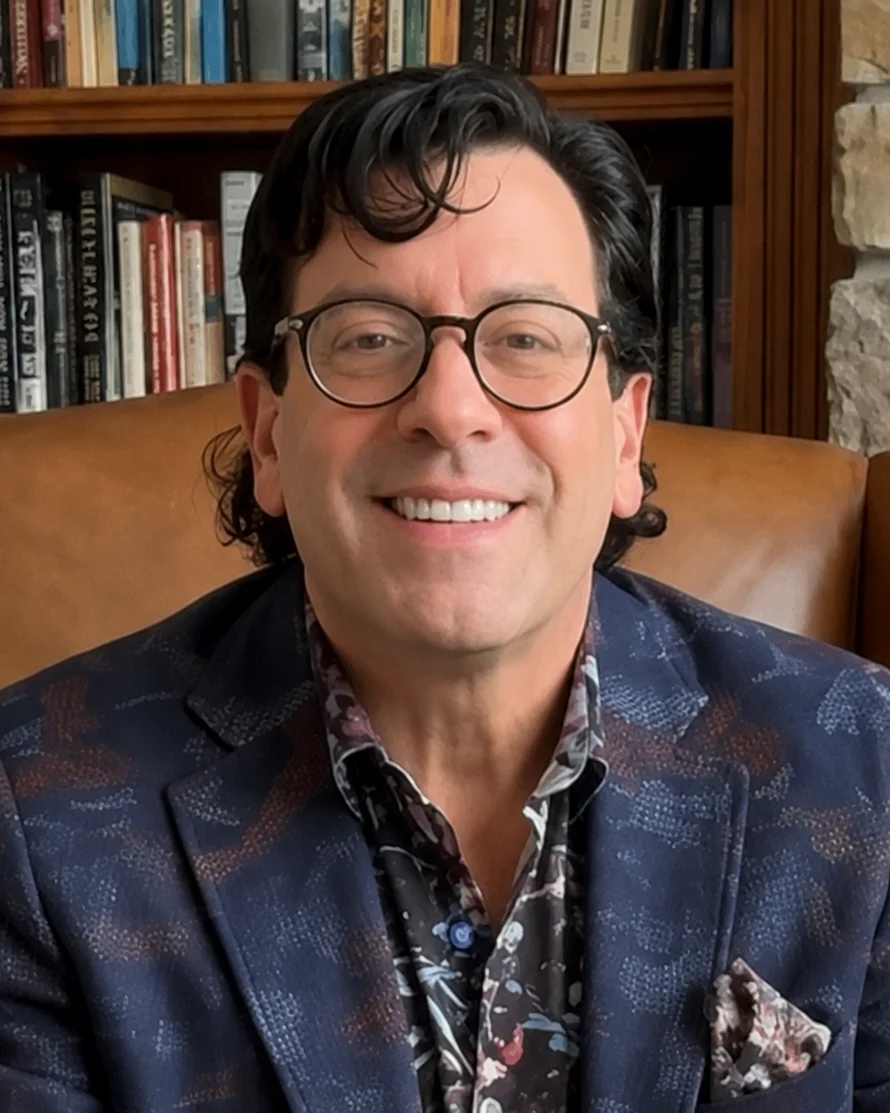
Rick Novak seated in a leather chair in front of a bookshelf

About the author

Rick Novak

Every book on this site begins with a question.
Sometimes that question appears in a courtroom.
Sometimes around a kitchen table.
Sometimes in a recovery meeting.
Sometimes in the quiet moments after the rest of the world has gone to bed.

The setting changes.
The question never does.
What happens when a person finally sees themselves clearly?
I've spent much of my life sitting with people on the day their old way of living stopped working.
Listening to conversations that were never meant for anyone else.
Watching the moment someone stopped defending an old story long enough to wonder whether another one might also be true.
Eventually I realized I wasn't only listening to those stories.
I was writing them.
I write about family, recovery, grief, and the awkward business of loving other people. My characters make excuses, mean well, get things wrong, and occasionally find the words they should have said years ago.
The books you’ll find here are different on the surface.
Some are novels.
Some are reflections.
Some grew out of recovery.
Some out of the courtroom.
Some out of conversations that stayed with me long after the room had emptied.

But they’re all asking that same question.
And underneath it, another one.
How do people change?
Not in dramatic moments.
In ordinary ones.
The conversation that finally becomes honest.
The apology that is no longer about winning.
The empty chair.
The yellow legal pad.
The shattered glass.
The door left open.
The ordinary moments that quietly become turning points.
If you’ve found something here that speaks to you, I hope you’ll find another question worth carrying in one of these books.
Because that’s all I’ve ever tried to write.
Books that stay with people long enough to change the way they see their own lives.

Your next chapter

Read any way you like.

Every book here is free. No purchase, account, or email signup.

Reading right here

Tap Read Online under any book. It opens right on this site, on any phone or computer, with nothing to install. Use A− and A+ at the top to make the words smaller or bigger. If you stop partway, the book remembers your place on that same phone or computer.

Reading on Kindle

Tap Download to save the book. Then open Amazon’s Send to Kindle and follow the instructions to add it to your Kindle library.

Reading on iPhone or iPad

Tap Download, then open the saved file in the Books app.

Reading on Android or another reading app

Tap Download, then open the saved file in Google Play Books or any reading app that opens EPUB files.

Do I need an account?

No. Every book is free to read or download, with no account, payment, or email signup.